Tuesday, April 25, 2006

Bloviation: Passengers Will Please Refrain from Passing Water While The Plane is at the Terminal


We’ll begin boarding with our first class passengers, members of the Frequent Migratory Ducks Club and standing room passengers--I remember when flying was a special experience. Many people got dressed for the flight; stewardesses (that’s what they were called) were all lovely young women with actual smiles; the food came in plates with silverware and despite comedian jokes was actually edible, and the seats were comfortable with plenty of leg room. Fares were reasonable and controlled. I remember one flight going to college on a DC-7 (yes, I’m that old), with a gin and tonic in hand, watching the sun set on the cloud tops thinking this was a terrific way to travel. You don’t need me to tell you those days are long gone. Now an article in the New York Times points out that--and this is going to be hard to believe--things are about to get worse. [Click headline or here]

With the exception of the CD industry, no industry in America does more to piss off the very customers it needs most than the airlines. They are now getting paid back for the abuses they piled on their best customers before 9/11. And they have learned nothing. Nothing! It’s getting worse. Northwest now charges extra for an aisle seat.

Now comes news that having crammed as many humans into their flying tubes as they could, they now have found ways of jamming in even more. Are you ready for standing room? Airbus is thinking about a section on the new planes where you would stand, strapped to a back board in the rear of the plane. It does not necessarily violate safety rules and would only be used for short flights, say island hopping in Japan. So far, Japanese airlines are cool to the idea. I should hope so.

Currently, the pitch--the space between the front of one seat and the back of another--commonly is 31 inches, which means, if you have long legs, crossing them is out of the question. Some rows on some airlines are even down to 30, and American Airlines, which once advertised more legroom in its coach sections, has piled them back in. Newer, thinner seats which could be used to increase leg room are being used instead to steal another inch from each passenger.

New planes aren’t going to be the answer. Boeing’s upcoming 787, was designed for eight rows across two aisles. At least half the airlines ordering the plane have asked for nine across. The giant Airbus 380 (500-passengers, double-decked), has generated stories that it would have bars, beauty parlors and shopping malls on board. Nonsense. The airlines will fill every square inch with seats.

We can go into the economics of airlines some other time. The fact is, you and I are partially responsible for this. We will fly with whoever has the lowest fares, even if those fares lose money for the airlines, drive their planes to turning them into sardine cans with wings, and accept terrible service. I stopped flying the worst abusers (Northwest and Delta). You can’t have rock bottom fares and good service. It doesn’t work that way. What’s the difference between flying from New York to Chicago and taking a Greyhound? The Greyhound is more comfortable. It just takes longer

And someday we’ll discuss deregulation, malicious mischief disguised as public service. And of course, really fat passengers in coach. Bring back the CAB!

Friday, April 21, 2006

Decline of Western Civilization—Part V I--Everybody knows there's no sanity clause


Look, we sat in the back room smoking a joint and this is the best we could come up with--The Federal Food and Drug Administration (FDA) announced yesterday there was “no sound scientific studies” to support the use of marijuana for medical purposes. The announcement, of course, directly contradicts a study by the Institute of Medicine of the National Academy of Science which says exactly the opposite. Strike another blow for the Bush administration’s war against science. It also is another in a long situations in which the states have assumed leadership in American society because Washington is a lost cause. Think Massachusetts and health care. Eleven states have legalized medicinal use of marijuana and have repeatedly told the federal government to shove its objections. The Supreme Court ruled that the feds can arrest anyone using marijuana even if they are complying with state law, but that decision is unlikely to last very long. The Supremes are getting older and you know, some get sick and... A spokesman for the Institute of Medicine said the FDA statement was wrong--which it is.

Go To Jail. Go Directly to Jail. Yahoo! Sent you--Yahoo!, the ubiquitous Internet company has now helped the Chinese government send a third pro-democracy Internet writer to jail. Reporters Without Borders has obtained a copy of a verdict in the case of Jiang Lijun, who was sentenced to four years in prison for exercising free speech. Yahoo! helped the police finger him. According to the rights organization, Yahoo! is responsible for squealing on most of the people the group is defending. Yahoo! and Google, which has also sold its soul, claim they have no choice if they want to do business in China. Yes they have. They can move their servers out of the country. Or not do business there. They really do have choices. We all do.

Look, skepticism is a psychiatric disorder and we just happen to have a little pink pill--A study at Tufts University found that 56% of the 170 experts who put together the Diagnostic and Statistical Manual (DSM), the bible of psychiatry, had a monetary relationship with a drug company. I know. I know. You find that hard to believe. Do keep in mind we’re talking about an industry that comes up with a drug first and then finds a disease for it. According to the Tufts researchers, 95 of the experts who worked on 1994 edition of DSM had at least one monetary relationship between the years 1989 and 2004. Usually, it meant research funding. Lisa Cosgrove, the lead author, said that doesn’t mean there was influence but it does mean the manual doesn’t have a disclosure policy. People using the book need to know this. One defender, Michael First of Columbia, said the drug companies had absolutely zero influence on the contents. This is the book that lists dozens of normal human attributes as diseases for which--wait for it--there just happens to be a drug. Uh huh.

Wednesday, April 19, 2006

The President's Song


"The President's Song"
Parody by Phil Alexander
(Based on "The Major-General's Song" from Gilbert and Sullivan's Pirates of Penzance )


PRESIDENT:
I am the very model of a bible-bound creationist.
A blinkered, blind and narrow-minded dumb-ass revelationist.
I find it hard distinguishing religious from political,
And so I make decisions that are highly hypocritical

I try and change the law to save the life of someone comatose,
While ordering a war and killing anyone who comes too close.
The latest body count was twenty-thousand-plus civilians,
But I've got policies that could cause carnage by the millions

ALL:
But he's got policies that could cause carnage by the millions,
But he'sgot policies that could cause carnage by the millions,
But he's got policies that could cause carnage by the millions

PRESIDENT:
I know the world was made for us, and has been since it first begun.
It says so there in Genesis, and God knows I'm a Christ-ee-yun.
In short, in matters biblical, a congregagginationist.
I am the very model of a bible-bound creationist

ALL:
In short, in matters biblical, a congregagginationist. He is the very
model of a bible-bound creationist

PRESIDENT:
My country's use of gasoline is profligate and decadent.
It's harming our economy and the whole world's environment.
Global warming morons warn of crises so hysteric and
It makes me thank the Lord that I was born to be American

Like anyone in power who wants to show their adherence.
I pick and choose the bits I use from both Old and New Testaments.
The Satanic secular types show how much they fear me.
When I announce that evolution's no more than a theory

ALL:
When he announces evolution's no more than a theory.
When he announces evolution's no more than a theory

PRESIDENT:
Then I can draft a scary bill that's more than taking liberties.
But arguing impugns your patriotic sensitivities.
In short, in matters patriotic, criminal or terrorist,
I am the very model of a bible-bound creationist

ALL:
In short, in matters patriotic, criminal or terrorist.
I am the very model of a bible-bound creationist

PRESIDENT:
In fact, when I know what is meant by true religious parity,
When I don't think the West is under threat from secularity.
When my lack of brain-power's not undermined by literacy,
And when my foreign policy's less gunboat, more diplomacy

When I have learnt the difference 'tween sandwiches and sand wedges
When I can use with confidence the whole damn English lang-u-wedge.
In short, when I can state a statement oh, so very statedly,
You'll say no president's ever misunderestimatedly

ALL:
You'll say no president's ever misunderestimatedly.
You'll say no president's ever misunderestimatedly

PRESIDENT:
I know there ain't much knowledge that's contained within my cranium ,
I went to see the Wizard, but he can't give me a brainium.
But still, in things political or educa-ca-cationist,
I am the very model of a bible-bound creationist

ALL:
But still, in things political or educa-ca-cationist .
He is the very model of a bible-bound creationist

[Thank you, Carol]

Tuesday, April 18, 2006

Is that a cell phone in your pocket or are you throbbing to see me?

Link
Why are you standing there smiling and stroking your leg?--You are sitting at your desk, or at a movie or walking down the street and you feel it. Your cell phone, set on "vibrate," is beginning to throb. You pull it out, flip it open and--nothing. You have been the victim of phantom cell phone vibrations. Cell phone companies deny it can happen. A search of the scientific literature produces nothing, but we all know it happens. The only literature I've found on the subject is a piece done last year by Joe Orso, a student at the Columbia Graduate School of Journalism. Orso's problem is writing a story without experts. He was too far ahead of the field. He interviewed several people on theorizing the phantom phenomenon, and the lay explanations ran from psychosomatic (you are consciously or subconsciously expecting a call) to hallucinations (you are in love or something). The closest he gets to an expert is Christine Rosen, who has written on cell phones for New Atlantis. “Cell phone users talk about the reassurance of being constantly connected,” Rosen said. “It signals to everyone around you that you’re part of another community. So you’re not just a stranger in a public space, but you’re a person who’s in demand and who can demand the attention of someone else.”

He does have one psychology grad student to suggest that the vibes are similar to phantom call tones: if the ring is similar to a common pitch, you may hear it when it isn't there. Then there is the coed who honestly admitted she wants people to call her continually and when they don't, well, the phone throbs.

When we are done researching that, we can get to the other phone call vibration question: why does it feel good when it goes off in your pants pocket?

[By the way, do you know why they vibrate? The have little fly wheels with weights on the end and a phone call gets the fly wheel spinning.]

Monday, April 17, 2006

One thing you have to say about New Jersey: the ground doesn't move


Hey dude, that house is definitely worth a million-five, and I just adore the landfill it’s built on--I loved living in California but one of the reasons I moved had to do with a little adventure on Oct. 17, 1989. I was walking from the restroom down a corridor at my Stanford office when I heard the unmistakable sound of a train running under the building. I knew perfectly well what that meant: there is no train under my office. It was an earthquake. This one seemed dramatically larger than any I had been in before, so I assumed a fetal position on the floor while books, book cases and anything not tied down began to fly around the room. The whole thing lasted 15 seconds (trust me when I tell you it was the longest 15 seconds of my life) and when it was done I was pulling a pregnant co-worker out from under a desk covered by office debris. My son, then a Stanford student, spent the night in a tent until the engineers could determine if the dorm was safe, several old buildings on campus were totally trashed. It was the Loma Prieta Quake

My wife-to-be was on a bridge over a creek in the woods that comprises the UC Santa Cruz campus, also safe, but downtown Santa Cruz was a wreck and people died. If you were watching the Giants-As World Series on television, you saw what happened when a 7.1 quake strikes the Bay Area.

I bring this up because it is the anniversary today of the Big One, the 1906 earthquake and subsequent fire that destroyed San Francisco (the fire did more damage than the quake, by the way). Also, some scientists are releasing a computer model of what happens if that quake is repeated in the Bay Area. Kind of makes real estate prices look even crazier.

It could easily match Katrina. The study, reported at a meeting in San Francisco by structural engineer Charles Kircher of Mt. View, using 2,000 census tracts, predicted that as many as 3,400 people could die, 700,000 people would be homeless (when you are homeless from a million dollar cottage you are homeless indeed), the exteriors to 130,000 buildings would be wrecked and damages could be as much as $125 billion. That’s billion with a b. It is absolutely true that modern building codes in California work--think of what a 7.1 quake would do in Afghanistan--but there are still buildings grandfathered out of the code, and even the best code and construction can’t save everyone. The urban core of Oakland, Berkeley and San Francisco still have lots of those buildings and of course that’s where the poor live. You see the picture. The population also is 10 times what it was in 1906 and land values are out of sight. And the same people who handled the hurricane are still in charge. Need I say more?

Most of the people and most of the one-trillion dollars in property are within 25 miles of the San Andreas fault, the geological fault that ripped in '06.

Our dear friend lived in a beautiful house in the Santa Cruz mountains in 1989, one of the most beautiful houses I’ve ever seen. One minute she was indoors doing something and 15 seconds later she was outdooors. The house collapsed around her. It had not been attached properly to the foundation. It’s likely she’s not the only one that happened to.

The 1906 quake would have registered 7.9 if there was a Richter scale then (remember the scale is logarithmic so the difference between 7.1 and 7.9 is substantial) and it killed 3,000 people and destroyed San Francisco from the bay to Van Ness Street. The federal government got immediately involved and made the situation worse. Some things never change.

Meanwhile, I live in Maryland and now if it is sounds like a train is going under my house--well, it still isn't a train.

[Top photo, city hall, photo by Jack London (yes, that Jack London) courtesy California Parks, middle, dead horses San Francisco 1906 via USGS. Bottom photo Pacific Ave., Santa Cruz 1989 via Santa Cruz Redevelopment Authority].

Thursday, April 06, 2006

I’ll take the Hopkins lipstick, the Stanford rouge and oh yes, a six-pack of M.I.T. Beer--2nd DAY LEDE


So I'm walking down the street and I see a sign advertising Johns Hopkins skin cream, and I'm thinking, hmmm. I need to get me some--Johns Hopkins Medicine said yesterday it was backing out of a deal it made with a cosmetics firm that touted its product as having been developed in consultation with the prestigious medical school. The announcement came after waves of derision and really bad publicity suggesting some smearing of ethical lines.

The Wall Street Journal reported [subscription required] that Johns Hopkins Medicine was allowing a cosmetics firm to use its name on the label. The medical school and hospital were not endorsing the beauty care products, only affirming that the testing was done in consultation with Hopkins. You have to read the small print. The cosmetics company, Klinger Advanced Aesthetics has the Hopkins brand on a new premium-priced skin-care line sold by Sephora, a unit of LVMH Moët Hennessy Louis Vuitton. Payment for use of the name would go to research. All hell has predictably broken loose, with newspapers having no trouble finding ethicists who are appropriately appalled.

According to the Baltimore Sun, this is what happened: The president of the university, Dr. William Brody, was walking down Fifth Avenue in New York [I'm not making this up!] and saw a poster for a new line of expensive cosmetics trumpeting the name Johns Hopkins Medicine in big letters. "Gee, I didn't think that's where we were going to go with this." I was going to ask for a show of hands of anyone who believes that, but decided against it. I believe it.

The arrangement was unique. No other research university has ever come up with a commercial arrangement quite like this, and a number of ethicists thought Hopkins had crossed the line. Many in the faculty were unhappy, and one wonders what other donors might have felt about the deal. Hopkins was to get money, equity and a place on the company's board. It now has announced it was giving up the equity and the chair and that the company can't use the Hopkins name. To go any further would probably mean a law suit. Hopkins said it acted only as a consultant, and wasn't endorsing anything except the testing procedure.

Blame the urge to get research funded with the federal government pulling back. According to Frederick Brancati, professor of medicine and epidemiology, who, helped get Hopkns into this mess, “We have to be inventive and creative.” The use of the Hopkins name is not an endorsement of the product, he said. According to ethicist Art Caplan at the University of Pennsylvania, “Unless you have acute vision and a lot of time to read [the small print], this is going to look like a product endorsement.”

Indeed, if Klinger was sure people would read the fine print they wouldn’t be paying Hopkins. If Hopkins had agreed to monitor the tests without giving permission for Klinger to use its name, Klinger wouldn’t have bothered.

“Hopkins says they are not endorsing the product, but they are,” said Mildred Cho, associate director of the Stanford Center for Biomedical Ethics, quoted in the Baltimore Sun. “What is the consumer supposed to take away from the fact that Hopkins’ name is attached to this product?”

Sephora’s website advertised Cosmedicine ™ “the first skincare line tested in consultation with Johns Hopkins Medicine.” Further clicking got you to a long, convoluted statement from Hopkins explaining the relationship, coming under the heading of protesting too much. If it takes you that long to explain what you have done, you probably shouldn’t have done it. The site is being changed.

In a great line, one former NIH researcher, quoted in the Sun, called the deal a ‘weapon of mass promotion... I don’t believe this is the function of a university.”

No it isn’t.

[Note to faithful readers: the owner of this here blog worked for Hopkins Medicine and was laid off two-and-a-half years ago on a financial restructuring. He is not amused. A family member still works there. He wishes them all well.]

Wednesday, April 05, 2006

Oh God, now they have a choice--UPDATED STILL YET AGAIN


If you were waiting for the other shoe to drop it's time to wash your socks--Apple just did what many of us suspected it would do: it has produced software that will allow Macs to run Windows. The stock, already astronomical [I resisted buying it at $15 before the split because I was told by experts never to buy stock on emotion], jumped seven points. And well it should.

Apple has released a beta of Boot Camp, software that will permit Windows XP to run on Intel-based Macs, the newest machines they sell. By year's end, all new Macs will have Intel dual processors. The moment they made the Intel announcement, people were wondering if that meant they could run Windows, which was designed for Intel microprocessors. Several hacks accomplished the deed. Apple first said it wouldn't support such a thing--go do it if you want to but leave us out of it. They apparently didn't mean a word of it or changed their minds. The new Mac operating system due later this year, Leopard, will include a final copy of Boot Camp and while Microsoft will have to support it, Apple won't mind.

You'll need to partition your hard drive, but with a Mac that's easy. Exchanging files may be a problem.

Why would you want to do such a thing? The current Mac system, Tiger, is already several generations ahead of Windows. But many people have software, usually corporate and proprietary, that only runs on Windows. Then there are all those games that run only on Windows. [Did you know there's not a single baseball emulation game for the Mac?] Now they can use Mac' OS X for everything else and still be able to run that stuff. Apple will sell a hell of a lot of computers to people who really want Macs and had been prevented by their IT people (scoundrels all) from using them. And Microsoft's new Windows won't be out until sometime next year--if they ever get their act in order. Computer geeks who've seen it, say the new Windows Vista still doesn't match Tiger, the current Mac OS, and by the time Vista is out, us Mac folks will be on to Leopard--with Boot Camp included.

[UPDATE: It should come as no surprise to anyone that industry observers are now reporting that Microsoft will delay Vista yet again, at least another three months, putting it back to about a year from now. Apple's Leopard should be making its appearance this fall. As one analyst put it, Microsoft is never on time.]


Several writers have suggested the next step, for which I approve heartily: make it possible for people now using Wintel computers (your Dell, your HP) to boot Mac OS. Then, instead of buying an expensive computer to run inferior software, you would be able to buy an inexpensive computer and run superior software. For a good explanation, go to Slate here. You miss the aesthetics of Mac hardware, but for some people that doesn't matter, particularly if you can save $500.

John Markoff's fine piece is here. The Windows-oriented PC World actually installed Boot Camp in a 20-inch iMac and was dazzled.

And remember, never buy stock on emotion. Sell Dell.

Tuesday, April 04, 2006

Have some Madeira, my dear, the benefits are abundantly clear. Or Not


I admired its nose, the vanilla nut foretaste with a little hint of cherries, cumin and high-density lipoproteins—Every couple of meals or so, I will open up a bottle of wine—Big House Red is the vin ordinaire on my table—for medicinal purposes, of course. It's good for my heart. [Sonograms of my heart taken only last week show a splendid organ, chipper and active]. Studies showing a relationship between moderate dinking and lower risk of heart disease are aplenty and get wonderful publicity—as well they should.

Now along comes a bunch of smart-asses at UCSF School of Nursing who claim all those studies are wrong because of flawed methodology. Geez! They think having a good aged red with your steak is not responsible for good health; it is a result of good health. The work goes back about 15 years to that of A.G. Shaper in London, who observed that many people who abstain from alcohol do so because they are getting old, are sick or use drugs affected by alcohol. These people then go get themselves counted in the studies on heart disease and lo, the number of people with heart disease who do not drink goes up. It biases the results. Not a lot of people took him seriously, mostly because we don't want to. I'll bet he kicks his dog too.

But the research at UCSF, published online at the journal Addiction Research and Theory, say we should pay attention. The researchers looked at 54 published articles on drinking and health and found that many of them included just those kinds of subjects, people who had just quit drinking for whatever reason, among those who abstained. Only seven discounted those subjects and all seven showed no benefit to the heart.

There is, however, biological evidence that light drinking has a beneficial effect, raising the level of high-density lipoproteins, the good cholesterol and I am content to leave it at that. I have a 15-year-old bottle of Ahlgren cabernet to be opened next year. It will do my heart good.

To hell with them.

Sunday, April 02, 2006

Guest Columnist—I really don't want them to know about my hemorrhoids


By Spyros Andreopoulos

Despite a strong push by the Bush administration for the majority of Americans to have computerized medical records within 10 years, I am not sure I want the attending privacy risks.

I don't believe the hype dished out by our government that the odds of my survival after a heart attack would improve because the emergency-room computer would let the doctor connect to the Internet, type in a password, and within a few clicks, view my medical history and begin treatment. Those who write this fiction have never seen a real emergency room in operation.

I cannot deny the positive benefits for public health in having medical records computerized. They make it easier to track diseases and side-effects of prescribed medications. They can prevent redundant invasive procedures, X-rays, MRI and CT scans and blood tests. Universities, where most clinical trials of new drugs take place, have access to data for research. Billing is more efficient, and bad claims are caught more quickly. If an individual is insured or gets sick in another part of the country, that person's medical history is readily available to another doctor or hospital.
But I am wary at the thought of my medical history floating in cyberspace because we have no system to guarantee protection from hackers, insurers and drug-company marketeers.

I am also concerned because this new development is going ahead without adequate public participation. According to a 2006 survey by Health Industry Insights, a market-research firm, most respondents (70 percent) are unaware of the federal government's initiative to make electronic medical records available.

Another concern is cost. One estimate places it at $250 billion, to be offset by economic benefits of an estimated $700 billion that critics consider over-inflated. But these savings, spread over a decade, would go to the insurance industry, while the actual costs of implementing the system will accrue to doctors and hospitals. The new computerized system at Lucile Packard Children's Hospital in Palo Alto, for example, soon to go online, will cost $150 million.

The deployment of the new technology is also expected to create havoc among physicians with small practices who do not have the know-how, the management staff or capacity to re-engineer their practices according to the wishes of government bureaucrats in the same way as large group practices.

Experts doubt the government will succeed without committing tens of billions of dollars. There is no real sign the Bush administration will provide anything even remotely close to that sum. In Britain, the government's adoption of a similar goal is succeeding because it is driven by a single-payer system funded with an extra $10 billion in government contracts and enforced by mandated computerized standards applying to all hospitals and doctors. Approximately 95 percent of the doctors in the United Kingdom now use computers in their practice, as do most doctors in Sweden and European Union nations compared to a measly 20 percent in the United States.

There was a time when medical records were kept on paper in file cabinets of hospitals and doctors' offices. As electronic records gain ground, insurance companies and HMOs require detailed accounts of patient treatments and expenses to stem health costs. Previously, they asked only for basic information on diagnoses.

The chances for misuse are also greater. Employers could use the information to exclude applicants for employment due to medical history, and insurers to refuse insurance to those who are sick or have genetic predisposition to illness. The pharmaceutical industry is organizing conferences to explore how to "mine" information from electronic records for secondary purposes, including selling services and drugs to patients.

Let's not forget hackers and pranksters. Six years ago, a hacker downloaded thousands of confidential files from the University of Washington in Seattle containing patients' names, health conditions and Social Security numbers.

Polls suggest that 70 percent of Americans fear that there could be more sharing of patients' medical information without their knowledge; computerization could increase rather than decrease medical errors; some people would be reluctant to disclose information to doctors because of worries that it will go into their records, and existing federal protection rules will, in time, be relaxed in the name of efficiency.

Such fears are not without foundation. Last December's issue of Pediatrics reported, for example, that mortality rates for pediatric patients at Children's Hospital of Pittsburgh increased to 6.5 percent after the implementation of a computerized physician order-entry system, intended to prevent medication and patient management errors. While this finding does not mean causality and may have an explanation, it has stirred debate publicly and in cyberspace.

In the mid-1990s, Congress passed the Health Insurance Portability and Accountability Act (HIPPA) to protect patients from privacy violations. The regulations are full of loopholes and Congress may need to tighten the law's provisions. Under HIPPA, health-care providers have the right to process your insurance claims, discuss your case and send data about you to other specialists, respond to requests from public-health authorities, law-enforcement agencies, and your employer if you are injured at work, and send you fundraising materials. While these provisions may appear reasonable, HIPPA also allows health providers to share information with health-care business associates for the purpose of training their personnel. HIPPA gives patients the right to restrict uses of their medical information. Providers or health plans, however, are not obligated to agree to the restrictions if they state so in their privacy notices that patients sign when admitted for treatment. This is why patients must read the fine print carefully before signing.

Dr. David Brailer, appointed by President Bush to coordinate the move to electronic medical records, is a former software company CEO. In his public statements, he acknowledges the mind-boggling complexity of information systems, but with refinements and proper security systems, he believes electronic records can be made to work and be more secure than paper records.

If patient information moves successfully from paper to the computer, as its champions hope, the door to privacy abuses will swing wide open. One suggested solution is to give patients the right to work with the doctors to decide what is included in his or her record. A small step to be sure, but if the law and doctors were to give patients this amount of empowerment and autonomy, the doctor-patient relationship will have come a long way.

Spyros Andreopoulos is director emeritus of the Office of Communication and Public Affairs at Stanford University School of Medicine. Used with permission

And thank you, Spyros.

From: Technology and Privacy / Keeping snoops out of our health files

Thursday, March 30, 2006

MORTGAGE SALESMAN 888-555-1234


If you are really pissed off, press 1—One of the really useful technological tools to come along in telecommunications is Caller ID. We started using it about a year ago, and it has made life a lot easier. Even though our house has registered with the Leave-Us-The-Hell-Alone Directory, we still get calls because of loopholes in the law. So by looking at Caller ID and not answering any number that starts with an 8 or is identified as "unknown" we just don't get bothered. Unfortunately, that may not work any more.

This is filed under the rubric that if you give enough people chances to be assholes, at least one of them will take it.

There now are services you (and I don't mean you, gentle reader) can use that mask your telephone calls so people who use Caller ID are fooled into thinking there is a useful, respectable human on the other end. It's called "spoofing," the telephone equivalent of computer spoofing, using a fictitious e-mail address. Some companies sell calling cards; if you use them, the ID shows an entirely fictitious name and number. One company [SpoofCard] lets you change or scramble your voice, really handy for that obscene call you always wanted to make to the little boy or girl next door. Another, SpoofTel, says it is really just a way to guarantee privacy when you make a call. Privacy from whom? For $10 you get 60 minutes of talk. You dial a toll-free number, key in the destination and the number you want Caller ID to show.

According to the Washington Post, the Florida Attorney General, Charlie Crist, has begun an investigation, based largely on news accounts [click headline for AP story]. Interestingly, some of the biggest users of this practice seems to be political consultants who want to send out scurrilous messages without being caught. One Pennsylvania congressman, Tim Murphy, reported thousands of calls were made attacking him and, according to Caller ID, the calls came from his office. They didn't. Law enforcement agencies use it, sometimes illegally, to entice people to pick up their phones, and VoIP (Internet telephony) is particularly vulnerable. The victims of spoofing include Columbia University, which was swamped with callers protesting unwanted calls from university numbers, none of which actually originated from Columbia.

It makes me want to rethink my opposition to capital punishment.

Tuesday, March 28, 2006

Rat Chip; Or, the Modern Prometheus loves cheese


What do you get when you cross brain cells with a microprocessor? Largely ignored—European researchers have created an interface between mammalian brain cell (neurons) and silicon chips. Think of organic computers or neural prostheses for certain brain lesions. Since the research was done in Europe, part of the European Union's Information Society Technologies program, it has been largely ignored on this side of The Water. Had they done this at M.I.T., it would have made the Times. It's called the NACHIP project, and it crosses the barrier between living creatures and machines.

As the report in IST Results points out [click headline], those potential benefits are years or decades away and would fit into the some-day-man-will-mine-the-ocean-floor school of science writing. But there is a potential short term result: the use of neuron-silicon chips to test the effect of new pharmaceuticals on neurons.

And how they did this little stunt is amazing.

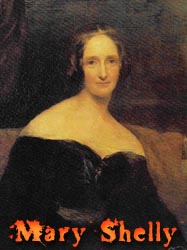
A German microchip company, Infineon, placed 16,384 transistors and hundreds of capacitors on a chip 1 mm square. Then the researchers took rat brain neurons and using special proteins, glued the neurons to the chip. The proteins did more than just glue the neurons; they acted as an interface so electric signals could pass from the neurons to the transistors and back again using ionic channels. The transistors can record the signals, and the capacitors can pass signals to the neurons. They tested it by stimulating the neurons and seeing which ones fired. The most pressing problem now, however, is getting that to happen without frying the neurons, which is what they are working on. The researchers are now preparing a proposal to communicate with the neurons using genes. Isaac Asimov would approve. So might Mary Shelly.

The work is being done at the University of Padua in Italy, the Max-Plank-Institute for Biochemistry in Germany, and the University of Zurich in Switzerland.

[And a hearty thank you to faithful reader CW, who worries that the whole thing is more likely to produce Frankenstein than Steve Austin, and a good point that is too.]

Friday, March 24, 2006

If you look it up you'll get cramps


Well, Glicken says the encyclopedia must be wrong—When I was a lad I served a term as a reporter at a Newark newspaper [you thought I was going to break out in song, didn't you?] learning the trade. I had an editor, Lloyde Seymour Glicken, who specialized in taking young fools like me and turning them into reporters. Many of us did very well in journalism. There even was an alumni association. He was a one-man journalism school and we loved him dearly. One day I used a word in a story that Glicken objected to. I, being a smart ass, immediately ran up to his desk, pushed a dictionary in his face and pointed out I had used the word correctly.

"The dictionary is wrong," Glicken said. End of argument.

Back in December, Nature published a study on the accuracy of encylopedias, mainly concentrating in the upstart Wikopedia, the cooperative web-based reference. It concluded that Wikopedia was surprisingly accurate and pointed out that the hoary Encyclopedia Britannica actually was not a lot better.
Nature's investigation suggests that Britannica's advantage may not be great, at least when it comes to science entries. In the study, entries were chosen from the websites of Wikipedia and Encyclopaedia Britannica on a broad range of scientific disciplines and sent to a relevant expert for peer review. Each reviewer examined the entry on a single subject from the two encyclopaedias; they were not told which article came from which encyclopaedia. A total of 42 usable reviews were returned out of 50 sent out, and were then examined by Nature's news team.
Only eight serious errors, such as misinterpretations of important concepts, were detected in the pairs of articles reviewed, four from each encyclopaedia. But reviewers also found many factual errors, omissions or misleading statements: 162 and 123 in Wikipedia and Britannica, respectively.
You can imagine the dyspepsia this caused at Brittannica. According to a newspaper in San Antonio, the Britannica folks have fired back with a fairly damning letter to librarians and researchers.
Those reports were wrong... because Nature's research was invalid. As our editors and scholarly advisers have discovered by reviewing the research in depth, almost everything about the Nature's investigation was wrong and misleading. Dozens of inaccuracies attributed to the Britannica were not inaccuracies at all, and a number of the articles Nature examined were not even in the Encyclopedia Britannica. The study was so poorly carried out and its findings so error-laden that it was completely without merit.

Since educators and librarians have been among Britannica's closest colleagues for many years, I would like to address you personally with an explanation of our findings and tell you the truth about the Nature study.
It goes on with chapter and verse of Nature's apparent screw-ups. Media that covered the initial Nature report, need to revisit the issue, methinks.

If you want to see how bad the Nature story was, click here.

[Glicken, who covered high school sports with uncommon attention when he wasn't being a tutor, died in 1999. He was my first mentor. And the dictionary was not wrong. Lloyde].

You can blame it on your ancestors, none of whom could play the piano—Among the genetic price you pay for being an Ashkenazic Jew is dystonia, a disorder that cramps muscles or causes involuntary movements. It isn't fatal, but it can be a pain in the career. Ask Leon Fleisher, the concert pianist whose career was diverted by the nervous disorder. Until Fleisher regained use of his right hand, he wound up playing mostly one-handed concerti. There are some, believe it or not. Botox apparently cured the camps and he's back playing the usual repetoire with both hands—and very well indeed. We can now guess something about his genealogy he didn't know before.

It turns out, Leon can blame his genes. Judy Siegel in the Jerusalem Post reports that a genetic mutation among a small group of Jews from Belarus in the 17th century is probably the source of Fleisher's problem—and that of other Ashkenazim. They were among the survivors of pogroms at the time and their small number produced a genetic bottleneck. Someone among them had the mutation, LRRK2 G2019S, and because of the circumstances, passed it on to others in the group. In the 18th century, the Jewish population of the area exploded and so did the mutation, the reason why one in four of the Jews who can trace their ancestry to that area, have the gene.

The work was done at Albert Einstein College of Medicine in New York and is based on work at UC San Francisco.

Interestingly, the gene is also found among a group of North African Arabs, further evidence that the Ashkenazim have Middle Eastern origins. They probably moved into Europe after the destruction of the Jerusalem temple in 70 C.E., and somebody, gasp, intermarried.

Tuesday, March 21, 2006

Bill O'Reilly, you stop throwing those peas! UPDATED AGAIN


Is your kid whiny, unpleasant, insecure? Don't fret. He can eventually get a job on Fox News—According to a study in the Journal of Research into Personality [not posted], disagreeable and insecure kids grow up to be conservatives. Confident, self-reliant children grow up to be liberals. But you know all that, right? Back in the 1960s, a husband and wife team, Jack and Jeanne Block at Berkeley began tracking more than 100 nursery school kids to study their personality. Using teachers and assistants, the Blocks surveyed the kids' personalities. Politics never entered the picture.

A few decades later, Block (his wife had since died) went back to the kids and looked at their personalities. The unpleasant and rigid kids turned into rigid young people who hewed closely to traditional gender roles and were uncomfortable with ambiguity. And politically, they were conservatives. Confident kids turned out to bright, non-conformists. The girls were extroverts, the young men a little introverted. And both sexes were politically liberal.

Actually, this is not the first time similar research produced similar findings. In 2003, a Stanford researcher, John Jost, concluded that people who are dogmatic, fearful, intolerant of ambiguity and uncertainty, and who crave order, are likely to tend conservative. He got a congressional investigation as a result, no doubt from guys where were really brats when they were babies.

Don't swallow that big round yellow thing, just the pill—One of life's little mysteries is the label on my blood pressure and cholesterol medicine (better living through chemistry) advising me, under no circumstances, to drink grapefruit juice when I take these medicines. Why the hell not?

Actually there is a reason but it's a little weird. In a story in the New York Times, Nicholas Bakalar reports that the reason is a substance in grapefruit that often emphasizes the effects of some medicines. There's a family of enzymes called Cytochrome P-450 [they'll be a pop quiz in the morning], particularly one called CYP 3A4, which changes substances in medicines so they can be less potent or more easily excreted or both. Grapefruit interferes with that process. The story oddly doesn't say what it is in grapefruit that does the deed because no one really knows, but the danger comes in taking a blood pressure drug and having the drug lower your blood pressure dangerously. Statins could lead to a fatal muscle disorder called rhabdomyolysis.

The answer is not to cut back on the medicine, apparently, and swig grapefruit juice. The answer is not to drink the juice. Too bad. Love the stuff.

Oh boy, now I can have viruses just like the rest of you!—One of the least interesting questions floating around since Apple started using Intel microprocessors on its Macs was whether its computers would be able to run Windows, which was designed for Intel chips. The answer is yes. The next question is why would you?

Apple never answered the question when asked if their Macs would run Windows. But a bunch of guys with too much time on their hands raised $13,864 for a contest to see who would be the first to pull off the stunt. The prize was won by two hackers who identified themselves only as "narf2006" and "blanka" [Jesus Lopez, if you want to know] who posted images and video of a Mac running Windows natively, meaning without outside help. It ain't easy, involving reformatting the hard disk and running a separate partition and disk images and all sorts of stuff you don't want to know. Graphics don't work and the operating system isn't particularly adept, but then neither is Windows. Emulators work better.

As to why anyone would want to—except to prove you can do it—the only reason would be to run software not available on Macs, mostly proprietary stuff your company runs. Otherwise, Mac OS-X is vastly superior. Now go get a life!

UPDATE: According to a posting on Slashdot, the hackers' blog
Sure, we all know that Windows can now run on Intel Apple Computers. Alas, the solution does not include drivers, and until now Mac users could still only hope to be able to use every application available to their Windows counterparts. However, with drivers now working 100% on the Mac Mini and drivers for the MacBook Pro only lacking video (which, by the looks of the 2nd link is only days away), Mac users now have a complete and working Windows solution.
UPDATE AGAIN: Meanwhile, Microsoft announced that Vista, the new rewrite of Windows, won't be ready for almost another year, and moved the guy in charge out the door. [Microsoft Office for Windows is also late]. By the time Vista comes out, us Mac folks will be on Leopard, the fifth rewrite of OS-X, and Microsoft will only be four generations behind.

Monday, March 20, 2006

Inhale and save your life--or not.


You can smoke that joint to fight your cancer but don't you dare enjoy yourself--What would the Food and Drug Administration do if scientists could prove that smoking marijuana--or at least taking tetrahydrocannabinol (THC)--could cure cancer? Probably nothing. Mythology and politics trumps science every time in Washington, and that preceded even George W.

Last year, researchers in Britain published a paper asserting that marijuana (or at least the THC) had potential as a cancer treatment. In some people, it mitigates the effects of chemotherapy, dulls pain, and stimulates the appetite (and you might have a nice time). This month the same researchers, at Barts and Queen Mary's School of Medicine and Dentistry at London University, published another paper claiming that cannabis kills leukemia cells. It appears to be one in a small collection of papers pointing to possible anti-tumor effects. [Got enough modifiers for you?] The paper was published in Letters in Drug Design & Discovery, which I am sure sits on your desk right now. No? Well, what the hell you think I'm here for. [Doesn't seem to be online yet]

According to a release [click headline] from Queen Mary's:
Now [the researchers], using highly sophisticated microarray technology – allowing them to simultaneously detect changes in more than 25,000 genes in cells treated with THC – have begun to uncover further the existence of crucial processes through which THC can kill cancer cells and potentially promote survival. Further, [they] found that the mechanism of cannabis may be independent of the presence of receptors – proteins found on the surface of cells to which other signalling molecules bind. Binding of molecules to receptors elicits a response in the cell, be it growth or death. The finding that cannabis action may not require the presence of these receptors introduces the possibility that the drug may be used more widely as the cancer cell’s dependence on the cannabis receptor is removed.

I hasten to point out that I have no idea if this paper has real merit, but I think it would be wonderful if it did, in part because it would help fight cancer, of course, and in part to watch the fun in the political world. I also point it out because, as we've discussed before, scientists outside the U.S. are doing interesting and important science that never gets a moment's attention among American science writers or in the media. Someone ought to pay attention.

Friday, March 17, 2006

Apoplectic apologies

Blogger's server (or filer, or something) was down for about 12 hours. And it still is not working well. Much of the business end is missing and the counter is off. We are not amused.

The management

Tuesday, March 14, 2006

Democracy or incompetence. Choose one--UPDATED OFTEN


Look, we're losing circulation and advertising. The obvious answer is to destroy the product--If you care about journalism, your heart should be breaking about now.

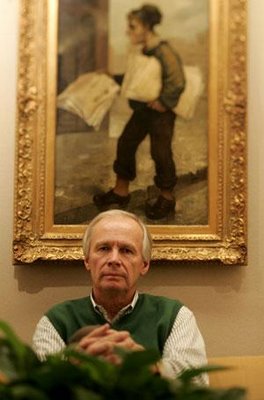
We are all aware by now of the fall of the Knight-Ridder newspaper chain. It is being dismantled, thanks to Wall Street greed and the incredible ineptitude of Knight-Ridder management. The chain was bought by McClatchy, which actually is the best newspaper chain left in America. That would be the good news. The bad news is that McClatchy is selling off 12 of Knight-Ridder papers to fund the purchase, including my old paper, the Philadelphia Inquirer. I was science writer at the Inquirer from 1969 to 1980, the best job I ever had in journalism. In the last 20 years, Knight-Ridder emasculated what was arguably the best newspaper in America to keep the ass-holes on Wall Street happy. (I don’t like using profanity on this blog but I am at a loss to find another word. I’m really pissed!). Tony Ridder [top picture], who drove his family-founded chain into the ground, is reported in the San Jose Mercury News (another KR paper destroyed by his management and now also up for sale) to be distraught. I weep for him.

Background: When I was hired by the Inquirer, Knight Newspapers, owned by the illustrious Knight family, had just bought it from Walter Annenberg, who ran a thoroughly dishonest newspaper. They brought in a man named John McMullen to clean house and turn it into an honest and fearless paper, which he did. The day of my job interview I had to pick my way through a picket line of Philadelphia policemen who were protesting a series of stories on police corruption. McMullen bragged about the number of libel suits he had pending, all but one of which, incidentally, he won. Sounded like my kind of place. I was hired. The Knights eventually merged with the Ridder chain of California, forming KR. Along the way, Gene Roberts [left, bottom], late of the New York Times, was brought in to run the Inky and in a matter of years, turned it into a great newspaper, probably the last great newspaper to emerge in this country. On any given day, we were simply the best. We had national correspondents and foreign bureaus, experts on any subjects (know many papers with an architect writer with a degree from Yale?), budgets that were now the stuff of dreams, and won something like 17 Pulitzers in 15 years. We just ordered champaign at the end of April, figuring it wouldn’t go to waste. The foreign correspondents, who won several of those Pulitzers, were legendary, including one Asian correspondent who allegedly had a pair of teenage female twins as housekeepers. To lure one Pulitzer winner back to Philadelphia from Rome, Roberts promised him he could cover the Phillies for a year. Richard Ben Cramer covered New York City until he went overseas. He covered the invasion of Lebanon by hailing a Tel Aviv taxi. No one else covered LA with the humor and eye of Murray Dubin. Don Bartlett and James Steele won two of those Pulitzers and should have won a third for their pioneering use of computers to analyze data for a story on the criminal justice system. They worked upstairs, were given an almost unlimited budget and were told to report downstairs whenever they had their story, any year they were ready. They were almost pathologically meticulous and never got it wrong. Don Drake, the medical writer, turned in a story or two a year, maybe, always wonderfully written and often heart-rending.
I could go anywhere I wanted to go if I could justify it on journalistic grounds, including the South Pole, and I was the first western reporter allowed into Somalia in a half dozen years to find the last naturally infected smallpox victim. I had editors who included some of the best I’ve ever known. A story I wrote with Susan Stranahan on Three Mile Island (coverage of which won another Pulitzer) was nominated by the University of Maryland as one of the 100 best newspaper stories of the 20th century. We knew while we were there we had the kind of jobs we dreamed of when we went into journalism. And, we were profitable. Sunday circulation topped 1 million.

I left to go to Stanford for various reasons and the Inky kept winning awards. Roberts sent my successor to Africa for several weeks because he thought there might be an interesting story in the endangered white rhinos. There was.

Then the suits in Miami, then KR’s headquarters, started putting the screws on Roberts’ budgets for financial reasons--profit margins weren’t high enough to suit Wall Street analysts. Roberts eventually quit, blaming the corporation for reducing the budget to the point he could no longer do the quality journalism he--and we--felt appropriate, and he just got tired of fighting them constantly. Most of the staff eventually followed. He was the first of several KR editors to quit for the same reason.

A good number of former Inky reporters and editors went on to major positions in journalism, their reputation as one of Roberts' people, assuring them the appropriate respect.

Tony Ridder, known as Darth Vader in his newsrooms, was far more interested in the price of KR stock and fearful of a takeover than he was for the quality of his product, his service to his community, or loyalty to his employees. Like other newspaper corporations, KR was under pressure from Wall Street to keep earning obscene profit margins (20% plus) and, as Roberts pointed out, the suits got together and somehow the answer to falling circulation and advertising was to give the readers less. It would be like General Motors deciding that in order to earn a profit they would take out the back seats of its cars. Budgets were cut, foreign bureaus eliminated, reporters and editors bought off or laid off and the papers are now remnants of their former selves. It, of course, didn’t work and couldn’t work. They teach this shit in business schools?

(By the way, if you want to see newspapers being destroyed before your very eyes, you are welcome to watch the Los Angeles Times and the Baltimore Sun, both owned by the Tribune Company in Chicago--and both formerly run by Roberts' disciples from the Inquirer--be dismembered. McClatchy is the corporation that proves the common wisdom wrong, incidentally. They have invested in their journalism instead of cutting back, and have had more than 20 years of growing circulation. Alas, they won’t try that at the Inquirer or the Merc.)

Now the Inky and the Mercury News and the St. Paul paper, are up for sale. The chance of white knights rescuing them is slim. There is Gannett, whose business plan demands mediocrity; William Dean Singleton, the anti-Christ of American journalism, and the Newspaper Guild and its supporters, who won’t win because the world doesn’t work that way any more. Good guys lose to greed every time.

An old friend, Laurie Garrett, who reported for Newsday, a Tribune paper, was invited to give a speech before Tribune Co. stockholders after she won a Pulitzer. In her speech, she pointed out that newspapers and journalism are unique businesses. So important are they to the running of a democracy that the Founding Fathers put special protection into the Constitution, a protection that no other field of endeavor enjoys, not lawyers or stock analysts or accountants. If, she told the stockholders, you don’t care about that responsibility, please invest elsewhere. Go buy stock in a shoe company or a computer company, and leave us the hell alone to do our jobs.

No one paid the slightest attention.

Steve Lovelady, one of the editors referred to above, has an interesting take on the business here. Also, nothing I am saying should be taken as a rap against the splendid people at the Inky now, one of whom is a former student of mine. They are in no way inferior in talent or energy to the Roberts era staff. There are just far fewer of them, they are limited in what they can cover, have smaller budgets and are working for howling incompentents, including a management that tries to explain how covering fewer things is good for business. That surely ain't the staff's fault. And yes, I read the paper regularly. David Zucchino, who worked at the Inky for 20 years and is now at the Los Angeles Times, has a good story this morning from the Inquirer newsroom. He points out the paper has 300 fewer reporters than it once had and describes the newsroom as vast but lightly populated. He, of course, should know. He works at another newspaper being run into the ground by nincompoops.

Question for discussion: is it possible that a public corporation cannot run a quality newspaper? The three best papers in the U.S. are still controlled by families. Family papers turned over to corporations (often Gannett or the Tribune Co.), immediately go downhill. Maybe the pressures on public corporations make it impossible for newspapers to function properly.

[The server has been down for several hours. We apologize]

[Photo of Tony Ridder from the San Jose Mercury News; photo of Gene Roberts from PBS]

Friday, March 10, 2006

Just because you are paranoid doesn't mean you haven't been googled--UPDATED


That guy Sergey Brin, he sure breathes heavy--If you are an employee of Microsoft you generally feel aggrieved that everyone buys your product and everyone hates you. You had one thing going for you, you were impervious to it all. No one really threatened the monopoly (and monopoly it is, gang). Just sometimes, in the dark shadows of night, you got to hear a little heavy breathing. If you listened just right, you heard the wind sigh: "Google."

Rumors have circulated for years that sooner or later Google was going to take on Microsoft in its most vulnerable place, application software--mostly Office--on the Internet. Microsoft has never quite gotten used to the Internet; the company always looks surprised when someone swoops in, takes control of an Internet function and swoops out with truck loads of cash. They were caught surprised by Netscape (for all the good that did Netscape). Apple's music hegemony must drive them crazy, and Google is the king of the search engines. Now Google is challenging Microsoft again. On the web. With applications.

What means is that Google may very well be finally taking on Microsoft in a vulnerable place. This shouldn't be over-emphasized, Microsoft only makes about 6% of its profit on Office; most of its money comes from Windows. But the philosophy behind Google is that anything you can do on your computer you can do better on the Internet.

Quietly, Google has purchased a small (four employee) company called Upstartle (isn't that cute?) that sells a program called Writely. Writely is a word processor on the web. You use it through your browser. It's good for collaborative work, particulary on the road. You can even upload Word documents. Since it is on the web, it doesn't matter where you are or what kind of computer you are using. More important, if you are writing as a committee or want to share your work, it doesn't matter where the other folks are or what they are using. And, you store it on the Internet, not your computer, unless you want a copy. Keep it on line and edit it there. You can store it as a pdf file, RTF or OpenDocument. Google already has a mail system, G-mail. Another Google move, long hinted, is something called G-drive. a place to store an almost infinite amount of data. You see the picture. Your computer becomes mostly a device to connect to the Web where you can do whatever you want. The Internet becomes your server.

And, it's all free.

UPDATE--Bill Gates clearly got the message. In a memo to his executives in October, Gates warned that the action was moving to the web and they better get on board the train. He has, however, said that many times before and the huge vessel he captains doesn't turn very quickly. He may have already missed--waiting for another metaphor out there are you?--the boat.

"Chris Gonna Find Ray Charles!"


Where are you buried, Christopher Columbus?--Seville. You asked. And who are you, Christopher Columbus? Stay tuned; we're still working on that.

Exactly who Christopher Columbus was (was he really a Sephardic Jew?) has long been the object of considerable speculation. So too is his burial site, with two cities, Seville and Santo Domingo, both claiming to have Chris's body. Columbus died in May, 1506 and it was generally believed he was buried in Seville. But in 1877, workers uncovered bones in Santo Domingo's cathedral, the Dominican Republic says are his.

A Spanish-led research team took DNA samples from Columbus' son and brother and then sampled the bones in Seville. They matched. The bones in Seville are Columbus'. The authorities in the Dominican Republic haven't permitted DNA sampling. It is conceivable, those bones are real also and poor Chris' skeleton was distributed to both sites.

As to who he was and his origin, the scientists are tracking down everyone they can find who might be related to him and will subject their DNA to analysis to see if they can pinpoint an origin. Stay tuned.

Thursday, March 09, 2006

Baby beluga in the deep blue miasma and herbal remedies won't help--UPDATED


Don't c
all me Ishmael. I can't find a white whale around here--Marine biologists working in Alaska have some chilling news: beluga whales may be endangered. Thirty years ago there were 1,300 in Cook Inlet. Last year, fewer than 280. No one knows why the decline. The gorgeous animals may wind up under federal protection. Such a listing was rejected in 2000 because it looked like overharvesting was the problem and that was fixable. Strict limits were placed on hunting but the population is still in decline. Something else is going on, says Lloyd Lowry at the University of Alaska at Fairbanks. It could be human assaults on their habitat, including from oil and gas development, but the cause of the decline simply isn't clear. What's scary, of course, is that any single event, like an oil spill could be the tipping point that dooms the species.

They really have a cure for cancer but the herb growers are suppressing it--Americans spend billions on alternative remedies, highly touted in natural food stores, in magazines, and books. Even the government, thanks to the numbskulls in Congress, is in the act, with Congress forcing the National Institutes of Health to start a center to study and promote the use of these remedies. Enter the law of unintended consequences. One consequence is that some of these remedies are actually getting tested scientifically. To the surprise of many, it turns out none of them seem to work. Last week, two popular arthritis pills, glucosamine and chondroitin were found to be no better than placebos. Last month, saw palmetto, often thought to help prostate problems, was shown to be useless. St. John's wort doesn't treat depression, shark cartilage doesn't help with cancer and echinacea doesn't work for colds.

UPDATE--Oh, and vitamin B doesn't prevent heart attacks.

Do you think it will make a difference to the $20 billion-a-year industry or to the people shelling out the bucks? Certainly not.

Wednesday, March 08, 2006

Well, at least it isn't blackjack


Will Jennifer Aniston please report to the marketing department—OK. You live in China and you want to research the political situation in Taiwan. You go to the computer, kick up the web browser, and get—nowhere. You've been blocked. The old 404 message. The government has censored the site (with the help of American companies who give lip service to personal freedom). Or, you are sitting in your office and have nothing much to do at the moment and decide to see if you can track down nude pictures of Jennifer Aniston. (You need a new job, by the way). You can't; your employer is filtering such non-business traffic. He even bought software off-the-shelf to let him do it, commercal co-conspirators. In other words, while the World Wide Web was designed specifically to free the intellect and the soul, government and private censorship has interposed.

Not to worry. Censoring the web is a lot harder than it looks. And to make it even harder, a number of folks have devised ways of slipping by the censors. Bless them. The best site may be Boing Boing's Guide to Defeating Censorware. Click here. Reporters Without Borders has technical suggestions. You can trick Google into doing forbidden things and some RSS readers can slip around filters as well, apparently. There's also software called Circumventor, which you can download for free on a server. There are lots of others ways of screwing the screwers, and a world of people who get just as steamed as you do willing to help. Happy to be of service.

I found that Jennifer Aniston picture are at.....what?....help!....I'm melting......